

Before It Was a Movie
How Greek Mothers Never Die Began With My Mother
Long before it became a feature film, Greek Mothers Never Die began with my mother, a one-woman show – and a joke about what would happen if she ever became a ghost.
By Rachel Suissa
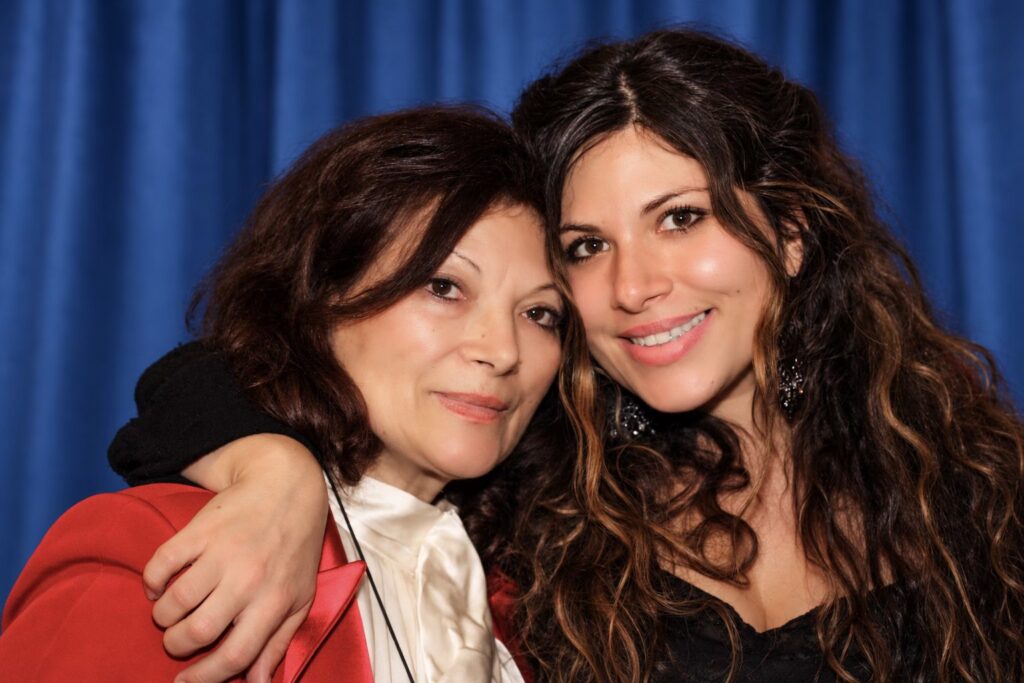
It Started With My Mother
Long before Greek Mothers Never Die became a movie, it was simply a collection of stories about my mother.
My mother, Eva, is Greek, larger than life, unintentionally hilarious, fiercely loving and – depending on whom you ask – slightly dramatic.
Actually, very dramatic.
The first person who understood that there might be a story in our relationship was my theater teacher and first director, Justine Heynemann. She knew my mother, and one day she suggested that I write a one-woman show about the two of us.
There was only one problem: I had never written anything before.
Justine gave me advice that would ultimately change my life. Don’t try to find the structure yet, she told me. Just make cards. Write down situations. Subjects. Things your mother says. Moments you never want to forget.
So that’s what I did. I started collecting my mother.
From Real Life to the Stage
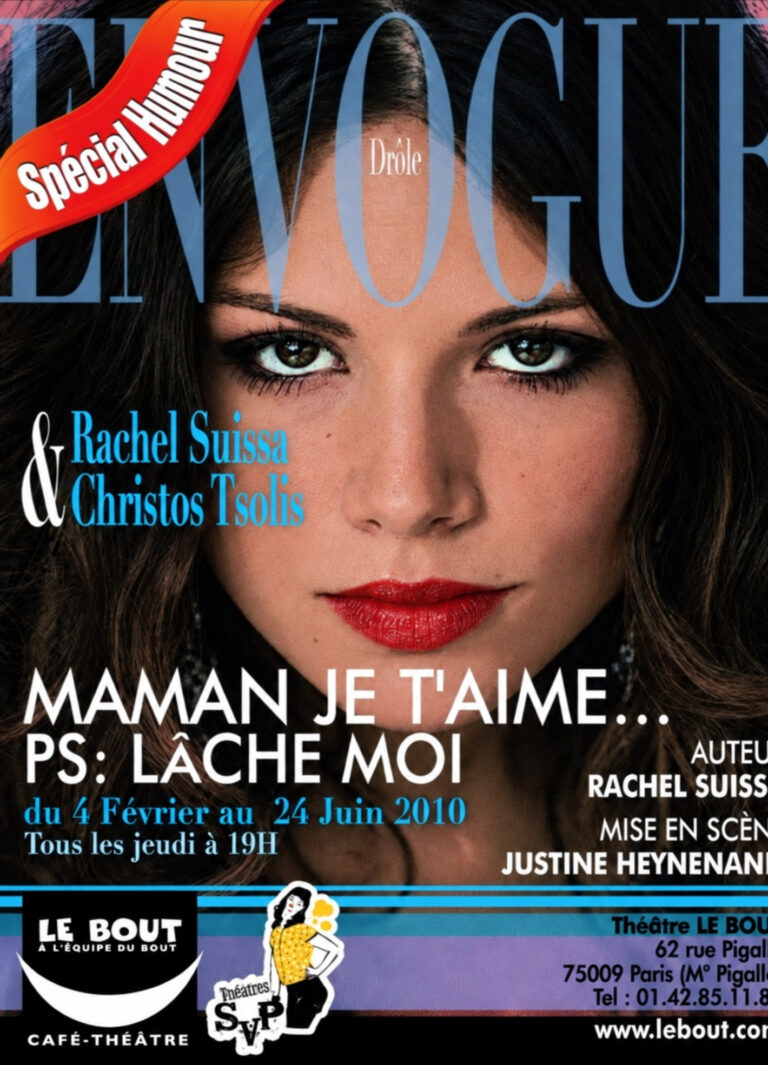
Those notes slowly became a stage show: Maman je t’aime… PS : Lâche-moi !, directed by Justine Heynemann and produced by my close friend Sabine Perraud. I was alone onstage, moving between myself and my mother – playing both sides of a relationship that, at the time, I thought I knew by heart.
I first performed it at Théâtre Le Bout, a tiny theater in Pigalle, while I was also acting in the French television series Pas de secrets entre nous. The show grew, and later moved into a larger Paris theater.
And before the audience really had time to discover the show, my mother decided there was one problem she could solve herself: the empty seats.
My Mother Became My First Publicist
Eva started stopping people in the street.
To women, she would say: “Oh my God, I thought you were my daughter. You look exactly like her – like two drops of water. You have to come see her onstage. It will be like looking in a mirror.”
Apparently, an extraordinary number of women in Paris looked exactly like me.
With men, her strategy was different: “Come see my daughter. She is so beautiful.” And then came the irresistible offer: if they came to see the show, she promised them free gyros – the Greek sandwiches – for a month.
If someone told her they genuinely could not afford the ticket, she would quietly buy the seat for them herself. For Eva, an empty seat was simply a problem waiting to be solved.
She was there almost every night. Even if we had had a terrible argument just before the performance, she would still arrive with two yogurts and sage tea for me – and, when my throat hurt, sometimes even leek juice. Refusing was rarely an option.
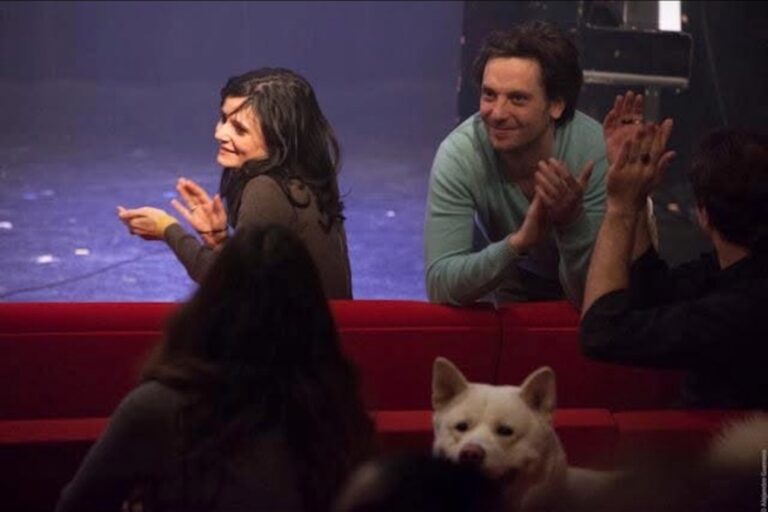
And she wasn’t the only member of the family in the theater. My brother Christos accompanied me live on the piano, so when my mother came to the show, she was coming to see both of her children. And on some nights, Bounti – my beloved dog and faithful companion, with whom I was practically inseparable – was part of the audience too. Between Christos at the piano, my mother in the room and Bounti watching along with everyone else, the show had become a family affair in every sense.
Then the curtain would go up, whatever had happened between us beforehand would disappear, and she would be the one applauding the loudest.
That was my mother. She could drive me crazy right up until showtime and still be my most loyal audience and my fiercest supporter.
When Something Personal Becomes Universal
After the show, people would often wait for me and ask the same question: “Did that really happen?”
My answer was usually: “The truth is worse.” I had actually watered some of it down, because there are things that happen in real life that an audience will accept as life – but reject as unbelievable the moment you put them into a story.
For example, as a teenager, in my mother’s eyes I had absolutely no weight problem – even when I was wearing a French size 46. If I complained that I could no longer get into my jeans, she would say, “They shrank in the wash.” If I pointed out that I had clearly gained weight, she would explain that I had heavy bones, a little water retention, and was otherwise perfectly normal. Depending on the day, according to Eva, I was basically Pamela Anderson or Nadia Comăneci.
That was part of what made the show work: the details were very specifically ours, but the love underneath them was recognizable. It was the first time I understood something that has stayed with me ever since as a writer: the more personal a story is, sometimes the more universal it becomes.
The more personal a story is, sometimes the more universal it becomes.
And Then Came the Ghost
One of the running jokes in the show was that my mother did not believe in privacy.
If my bedroom had a door, it didn’t have a lock. If it had a lock, my mother had the key. My mail could be opened before I had even seen it. She would call my friends for debriefs about my day at school. She was on my back 24/7.
One day, I was laughing about it with a friend and said, “Thank God she sleeps. At least at night, I’m free.”
Although even that wasn’t entirely true. Sometimes I would open my eyes in the middle of the night and find my mother in my bed, her arms wrapped around me, giving me a cuddle.
Then I added, “Actually, the day she goes to the other side, I’m doomed. If she becomes a ghost, she won’t even need to sleep anymore. It’ll really be 24/7.”
My friend laughed. “That would be huge. You should make that into a movie.” And I remember thinking: Wait. That’s it. That’s what I have to do.
Because if my mother was already impossible to escape while she was alive, becoming a ghost would make it even worse. No doors. No locks. No bedtime. No limits at all.
That joke became the seed of the film. I wanted to take the relationship I had been telling onstage and push it somewhere only cinema could go: what happens when the mother who never leaves you… literally never leaves you? That was the beginning of Greek Mothers Never Die.
My Mother Cast the Role Before I Could
Of course, Eva already knew exactly who should play her.
“There is only one woman in the world who can play me” she told me. “Mimi Denissi.”
Mimi was one of Greece’s best-known actresses. I had never met her, and I had no idea how I was supposed to reach her.
Two days later, my phone rang.
It was Mimi.
“Rachel, your mother told me to call you.”
To this day, I still do not know how my mother managed to get her private number. But that phone call began a real friendship between Mimi and me – a friendship that lasted through all the years it would take the film to find its moment.
What my mother could not have known was that almost fifteen years would pass before I finally made the movie. By then, time had solved the casting question in a way none of us could have predicted: I was no longer the right age to play the daughter. I had become old enough to play the mother myself.
“I Don’t Sound Like That.”
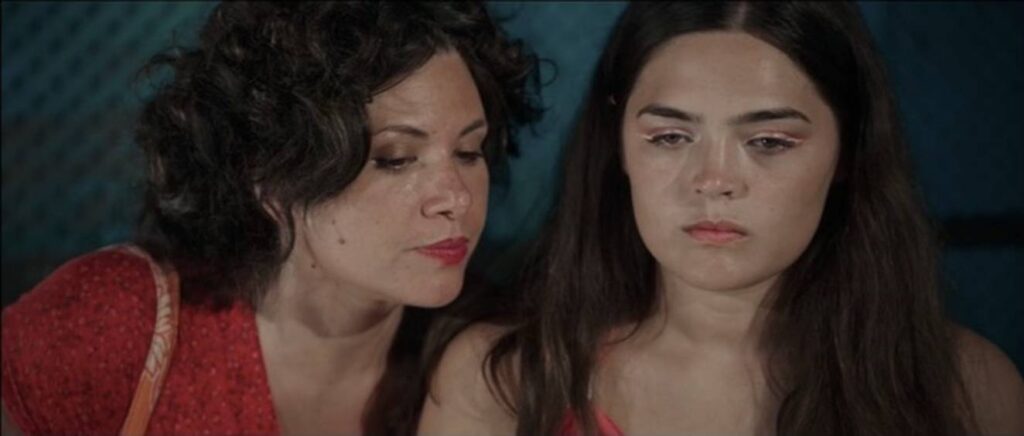
Years later, at an early reading of the film in English, my mother had one immediate objection.
“You’re not going to play me like that,” she said.
Part of the challenge was the accent. My mother had always spoken French with a heavy Greek accent. Now I had to work out what that same woman would sound like speaking English with a Greek accent.
Eva listened to me and protested: “I don’t sound like that.”
The funny thing was that I was already well below the truth. Just as I had done in the one-woman show, I was toning her down because sometimes reality is simply too much for fiction.
And when the film finally went into production, her concern was no longer how I was playing her. It was me. “How are you going to carry this movie by yourself with two children and an indie production, shooting every day? You’re going to make yourself sick. Are you taking your vitamins? Did you have your sage tea? Are you eating enough? Have a banana.” Even from a distance, she was still mothering me through the entire shoot.
When she finally saw the finished film, something much more moving happened. She stopped watching me play her and simply saw herself. To her, it felt as if it were the two of us on screen.
Her only real fear then was for me: would anyone be interested in our life? Would people care about this mother and daughter enough to follow their story? She wanted the film to work. That mattered to her far more than whether I had copied her accent perfectly.
Why Greek Mothers Never Die
The title was there from the beginning.
Greek Mothers Never Die.
Not because they literally live forever. But because somehow, they do.
When we are young, we can spend years insisting that we will never become our mothers. We resist them. We argue with them. We roll our eyes at the things they say.
And then time passes.
One day, you hear yourself saying exactly the thing your mother used to say to you. You recognize one of her gestures in your own. You raise your children and realize that somewhere along the way, despite all your best intentions, you have become a version of her.
Maybe a 2.0 version. But still – her.
And when our mothers are no longer beside us, something else happens. The arguments become smaller in our memories, and the love becomes bigger.
They continue living inside us. That was always the idea behind the title.
We spend years saying we will never become our mothers. Then one day, we hear them coming out of our own mouths.
A Movie That Wasn’t Ready Yet
At that point, I thought I was beginning the journey toward making a film.
I didn’t know it would take years. I didn’t know the story would cross countries, projects and different versions of my own life before finally reaching the screen.
I didn’t know it would take almost fifteen years, or that every delay, every change in my own life, would quietly reshape the film along the way.
Why Now? Why Indie?
By the time I was finally ready to make the film, I didn’t want to wait anymore. My mother was getting older, and I wanted her to see Greek Mothers Never Die before she became an actual ghost.
So I called my dear friend Éléonore, who had also produced Dangerous Liaisons, and said, “Here’s the deal. We just spent four years of our lives making a Netflix movie with millions behind it. Now I want to do something completely different. I want to step into the unknown and make this one independently, without taking it to a studio at all, because I want my mother to see it. Are you ready to follow me?”
She didn’t hesitate. “I’m in.”
That was the moment the idea stopped feeling like something I had carried for years and started feeling like a film we were actually going to make.
I had no idea how important that timing would turn out to be. Only a few months after my mother saw the finished film, she lost her sight. Had I waited another year, she might never have been able to see it at all.
Looking back now, I think perhaps the movie wasn’t late. Perhaps it simply wasn’t ready yet. Neither was I.
The Story Comes Full Circle
And now, just as Greek Mothers Never Die begins a new chapter with its international release, the story is returning to where it first began: the theater.
What started years ago with one woman alone on a Paris stage, playing both mother and daughter, has now become a full theatrical adaptation of the film, due to make its debut in Florida.
The story has changed form, crossed an ocean and lived many lives. And somehow, just as it is preparing to travel farther than ever, it has found its way back to its first home.