How a Netflix feature in France, the Hollywood strikes, and a chain of unexpected encounters brought my first U.S. independent feature to life.
By Rachel Suissa
A film built through word of mouth, local generosity, improbable casting stories, and people who simply wanted to make it happen.
The moment it became real
Éléonore Dailly didn’t hesitate.
I’m in.
That was the moment we moved from talking about the film to building it.
Éléonore and I had just come out of Dangerous Liaisons, my Netflix feature in France. This time there was no studio structure waiting around us. We had to build the structure ourselves.
Independent filmmaking itself was not foreign to me. Long before this film, my husband Christopher Fuller had introduced me to that world when I was still very young – films like Gummo, the work of Harmony Korine, the kind of productions where making the movie was inseparable from figuring out how to make the movie. Christopher became an associate producer on Greek Mothers Never Die and helped constantly – including reading the English script what felt like 580 times to make sure my French brain had not left anything strange on the page.
One filmmaking world ending, another one beginning.
Before the Crew, there was the Island
Before I lived on Amelia Island, I came there because I was considering it as a location for Greek Mothers Never Die. I arrived thinking about a film set. By the end of that weekend, I had decided two things: we were going to shoot the movie there, and we were going to live there.
We are shooting the film here. And we are moving here.
I had no idea yet how much the island itself would become part of the production. Not long after we moved, the local newspaper ran a double-page story about me: I had just made Dangerous Liaisons, I was preparing my first American independent feature, and I intended to shoot it on Amelia Island, where there had not been a film production in quite a while.
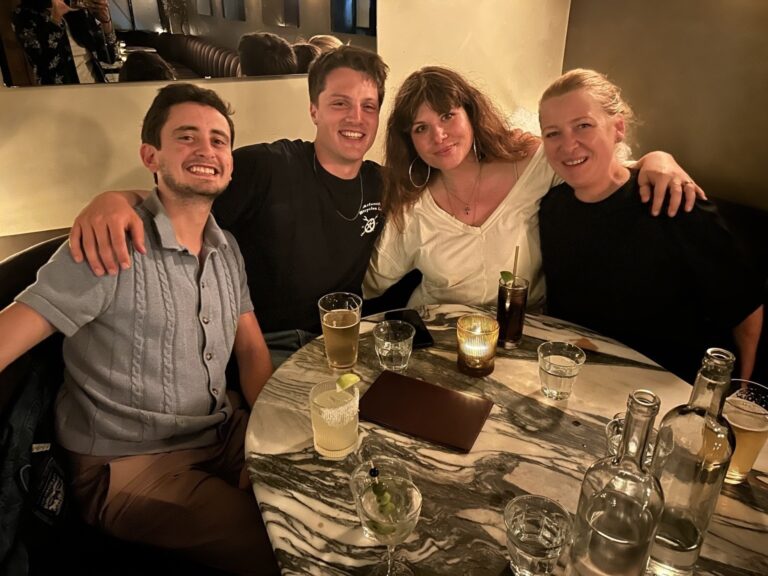
That article made people find me. One of them was Pauly Caruso. We met for coffee. He became our production coordinator.
I first came to Amelia Island looking for a location. I ended up finding a home - and, eventually, a community that helped us make the film.
I went looking for one first AD. I found two.
Once Éléonore said yes, the first practical person I needed was a first AD: someone close enough geographically, but above all someone who understood how to make a very small independent film actually function. I started digging through recent Florida productions and found Michael Petit and James Pearthree. They had managed to co-direct and co-produce their own feature for roughly $15,000, doing between them the kind of jobs that usually require a much larger team. The film later reached Amazon VOD and had built a real life for itself.
My thinking was very simple: if they had managed to pull that off, I wanted them next to me.
I did not know them. I basically had their names and social media. So I found them and asked whether they would join this slightly crazy adventure – not as directors this time, because unfortunately that position was already occupied – but as assistant directors.
They said yes. That was really where the chain started.
I had gone looking for one first AD and eventually ended up with two: Michael and James. From there, one introduction became another. That word-of-mouth chain would build a large part of our crew.
The production began with a few people saying yes - and then introducing us to the next person.
The meeting that failed - and found my DP
After Michael and James came on, the next encounter was the one that really allowed the film to start taking visual shape.
I was sitting in a Starbucks somewhere between Jacksonville and Amelia Island, trying to convince a man to let us use sound equipment, a truck and whatever else I could negotiate at a price our little film could actually afford. The meeting was not fruitful at all.
But a man at the next table had heard the whole conversation. He was a dancer and choreographer. When I left, he ran after me into the parking lot.
You are making a film? You have to call my friend Angelica Perez Castro. She is extraordinary. She is in Atlanta. She is the woman you need.
He was right.
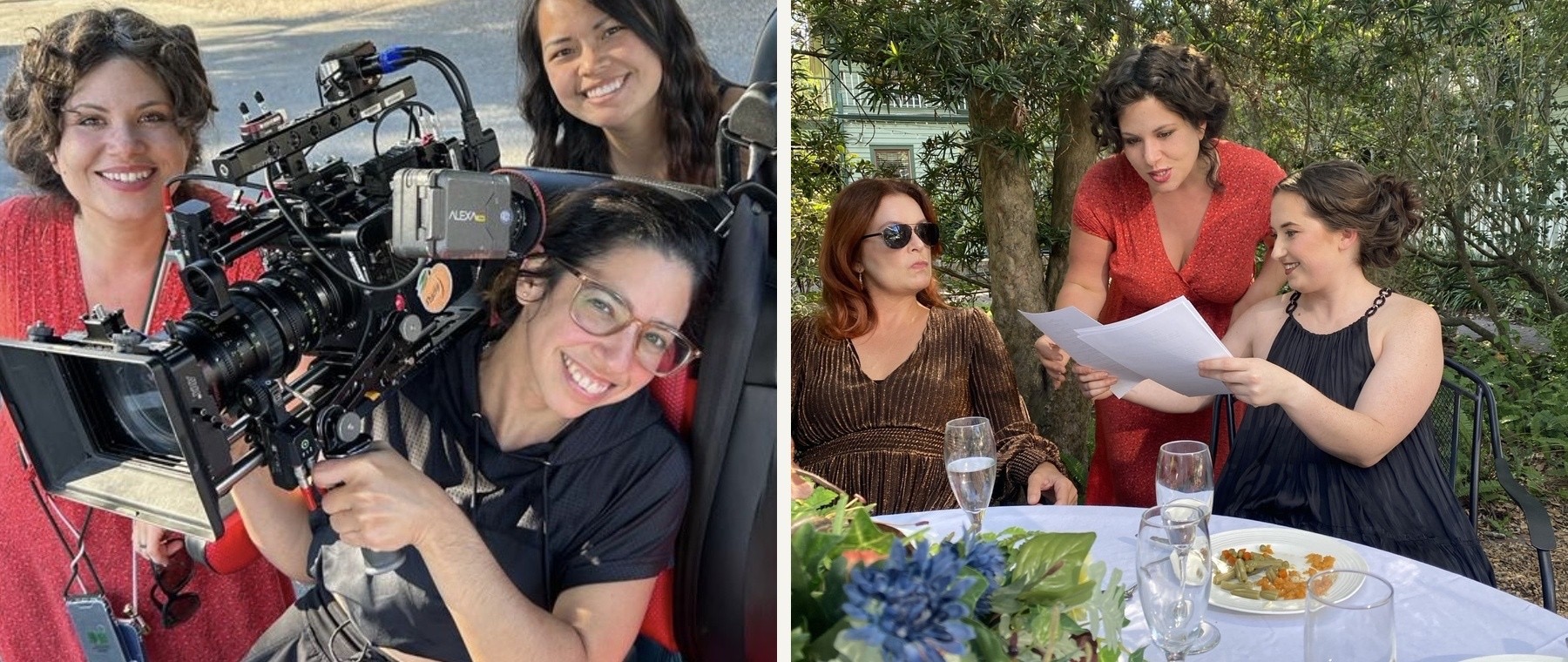
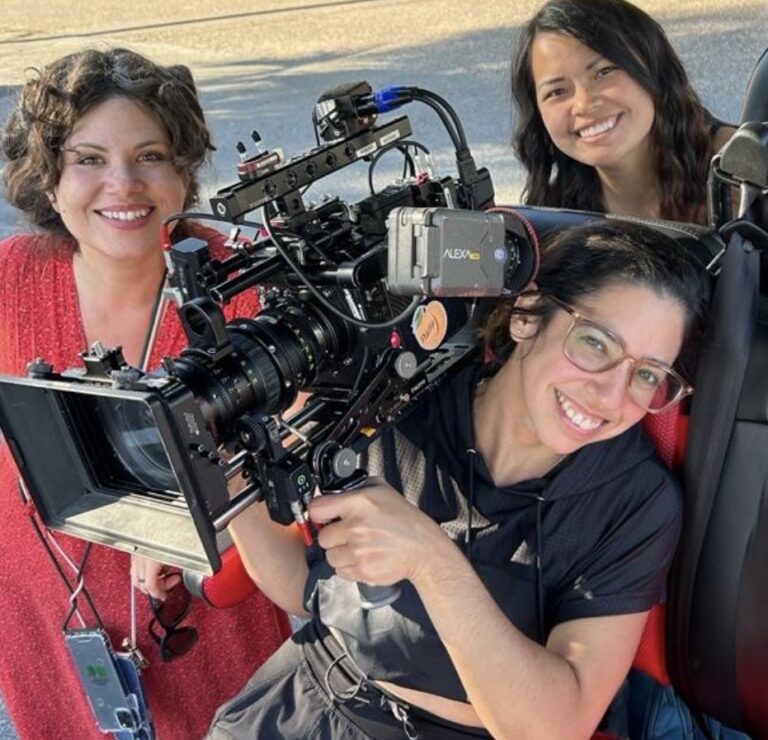
Angelica was an Atlanta-based director of photography and Steadicam operator. From the moment we connected, there was an immediate creative bond. She became my DP and one of the people who truly carried the film with me.
I never got the deal I had gone into that Starbucks looking for. I walked out with something much more important: the person who would help me find the visual language of the film.
A failed equipment meeting led, by pure chance, to the cinematographer who would help carry the film.
When Hollywood stopped, people still wanted to shoot
We were preparing Greek Mothers Never Die during the big Hollywood strikes. A lot of technicians and DPs who normally worked on much larger productions suddenly could not work on those sets. But they still wanted to shoot. They still wanted to create.
Many also genuinely wanted to support independent cinema. The timing created alliances that probably would not have happened on a normal studio calendar. People who were usually pulled into completely different productions suddenly had the availability – and the appetite – to build something smaller with us.
A surprisingly international film
Without really planning it, our little film had become surprisingly international. Actors were coming from Texas, Oklahoma, Atlanta, Florida and France. Our composer was working from Spain. Our music supervisor was in France. Natacha, who handled the film’s artistic side, was also in France. Post-production would later connect us back to Atlanta.
None of it was designed as some grand international strategy. It was simply where the right people happened to be.
Many also genuinely wanted to support independent cinema. The timing created alliances that probably would not have happened on a normal studio calendar. People who were usually pulled into completely different productions suddenly had the availability – and the appetite – to build something smaller with us.
The strike, word of mouth and a shared desire to keep creating brought together people who might otherwise never have crossed paths.
Casting without Borders
Distance had also become much less of an obstacle. Zoom was simply part of how people worked by then, so we could cast across the United States while also looking right around us in North Florida and on Amelia Island.
Old friends, New film
When I wrote the film, I already had someone in mind for the male lead: Simon Rérolle, one of the principal actors from Dangerous Liaisons. Simon is French-American, and he agreed to cross the Atlantic and join this completely different adventure.
Then I auditioned myself
I had also opened casting for the mother. I genuinely was not sure I was going to play her.
Éléonore was much less undecided. She told me, essentially: “If you make this film, it is inconceivable that you are not the mother.”
So I did the only fair thing a director could do: I made myself audition. I set up the camera, took two minutes to concentrate, and filmed the scene.
I watched it back. The audition between me and myself had gone rather well. I sent it to Éléonore. She confirmed the result.
Fine. Apparently I was the best person for the role.
More than 400 submissions. One Live callback.
The role of Ella as an adult was a completely different puzzle. More than 400 people submitted, and I only did one live callback.
It was not because there were not wonderful actresses. There were. But everything had to fit at once. I needed someone who could believably be my daughter, carry the character across the years, be genuinely funny and still have the emotional depth the later part of the story required.
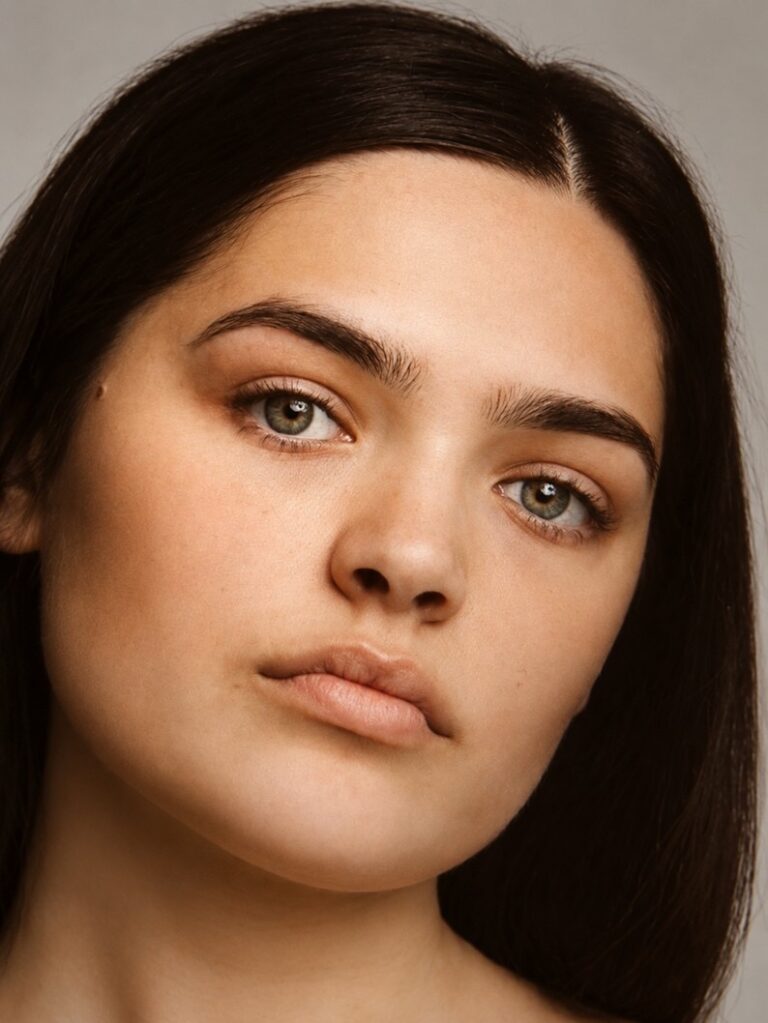
Then I saw Abby Miner’s photo.
Before I even watched the tape, I thought: that is going to be her.
The only problem was that her tape had not arrived yet. I kept asking James Pearthree, who was helping me with casting: “Did she send it? When is she sending it?” He kept telling me she had promised it for the last day. She sent it on the last day. I was not disappointed.
Abby Miner - the one headshot that made me stop before I had even seen the audition.
The only Callback
Abby became the only actress I called back live. After that, we worked together for weeks over Zoom before the shoot.
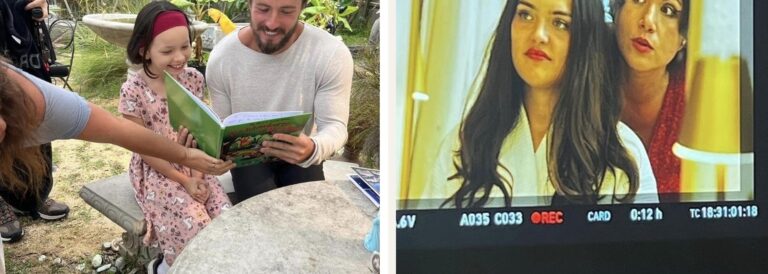
For the younger version of Ella, casting was considerably easier. The story begins when she is nine, and that role was played by my actual daughter.
So one character came together through two completely different casting stories: one after more than 400 submissions, and one who had been living in my house all along.
One daughter across the years: my real daughter played Ella at nine; Abby Miner carried her into adulthood.
The blue check I did not know about
Carter Sirianni, who plays my husband, arrived in the most ordinary way possible: he simply answered the casting call like everybody else.
His tape was simple – no fuss, just the scene – and something in the acting felt right. After I offered him the role, I asked for a few different photos so I could see him with different looks. He told me to check his Instagram.
I could not find him. I finally told him that the only person I could find with his name had a blue check and a huge following.
Yeah. That’s me.
I had absolutely no idea. He had worked in horror and had built a large health-focused audience, but none of that had entered the casting decision. He later told me that was exactly what he loved about getting the role: I had cast him for the acting without knowing anything about the fanbase.
Carter Sirianni - cast as my husband from the audition alone, before I knew anything about the blue check.
Sometimes the Island cast the film for me
A few roles arrived in ways no casting platform could have planned.
I first went to meet Francesca because someone had told me she might be kind enough to lend us her spa for a scene. Then I met her. She was striking, with extraordinary presence. I asked if she had ever acted. She told me she had modeled when she was younger, but never acted.
There is a first time for everything. Read these lines.
I pulled out the scene on the spot. Two minutes later, I had not only found a location. I had found an actress.
Alan was even less planned. Two days before shooting, I had lost the actor for one of the film’s deceptively important roles. At the bungalows where some of us were staying, I also happened to have a leaking toilet. A tattooed man arrived at my door with a bucket and tools and asked if I had a problem with the bathroom.
I remember thinking the toilet could wait. I asked him to sit down and read a scene for me. He told me he had loved theater in high school but life had taken him elsewhere. I filmed the reading.
He was perfect. The next day, he was in the movie.
On this film, a location scout could become a casting session, and a plumbing problem could solve a role.
The actor who auditioned for the wrong role
Wade Hunt Williams originally auditioned to play my husband. He was completely wrong for the role as I saw it. He was also far too good for me not to find another one for him. Wade has worked for years as an actor. He understands a direction almost before you finish giving it, and he became a rock for me on set. But first I had to work out who he was going to play.
A few days later, I was sitting in a movie theater watching Mission: Impossible. There was a scene that was apparently just long enough for my mind to wander, and suddenly the answer arrived.
Years earlier, I had written the role of Athena with Olympia Dukakis in mind, and she had told me she would be happy to participate. After she was gone, I had never really managed to replace her in my head.
Athena could become Zeus.
The leader could become a man, and Wade could play him. His audition had such a convincing Greek accent that I genuinely assumed he had Greek roots. I did not hear his real American accent until after he had the role.
There were also strange coincidences between parts of the script and Wade’s own life that moved both of us. It became the beginning of a real friendship and collaboration – and, I hope, more films to come.
Wade Hunt Williams - the actor who came in for one role and ended up inspiring another.
What RAD stands for
Around that time, I created RAD Pictures. The letters stand for Rachel American Dream.
The name came from the new chapter I was starting in the United States, but it never meant choosing America over France or leaving France behind. I wanted another place from which to create: to keep working in France, build projects in the United States, and let people and stories move naturally between the two.
Then the Island started helping
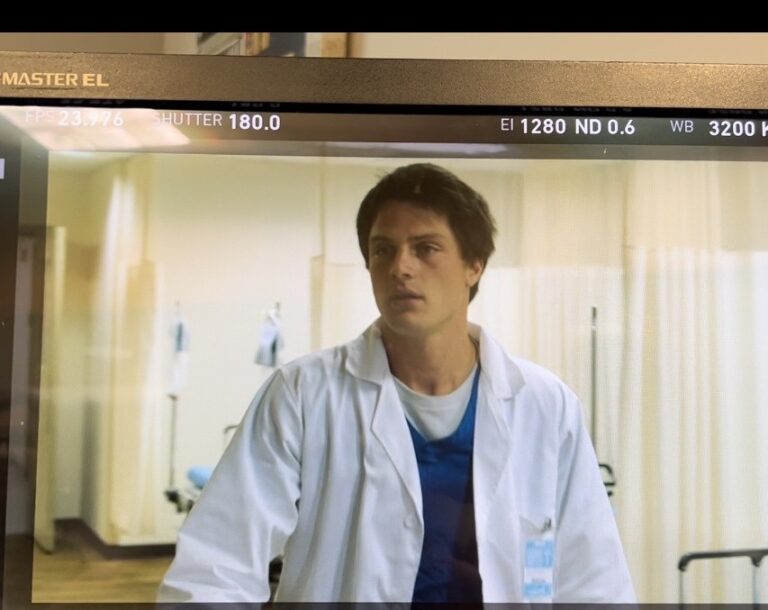
Once the film was moving, Amelia Island kept answering our needs. We needed restaurants. Owners opened their restaurants. We needed a clinic. Someone opened a clinic. We needed a bar. People let us use their bar.
At one point I needed a white Mercedes. I put a message on Facebook, and by the end of the day somebody had a white Mercedes for us.
That was the atmosphere around the film. A need appeared, someone knew someone, and a door opened. The generosity was not theoretical. It was practical, immediate and incredibly human.
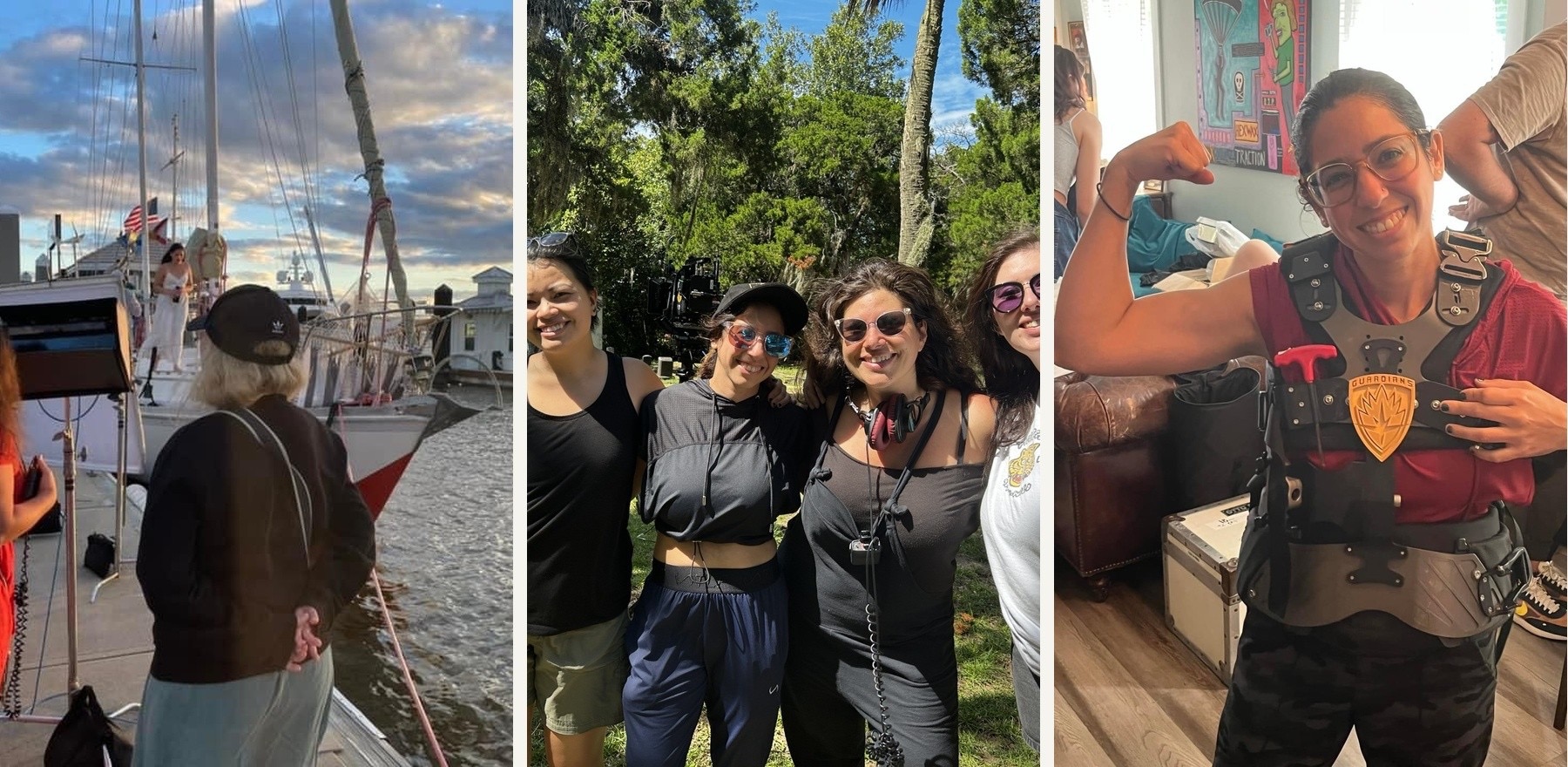
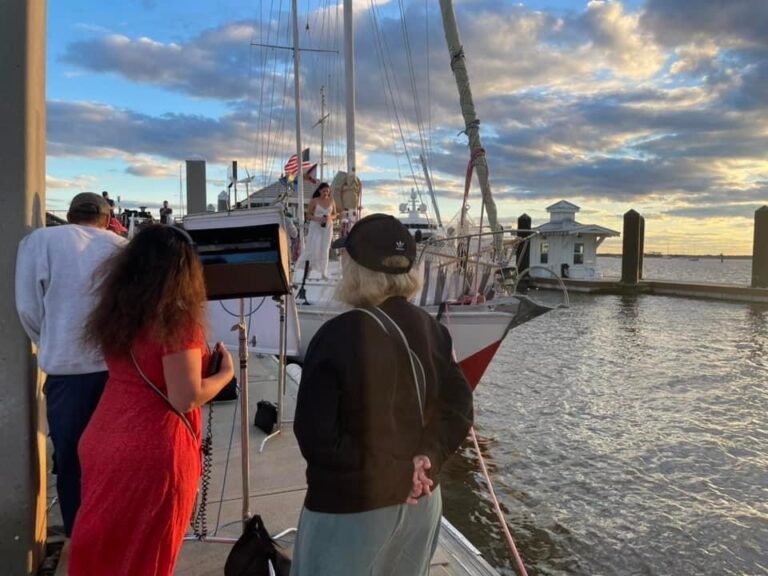
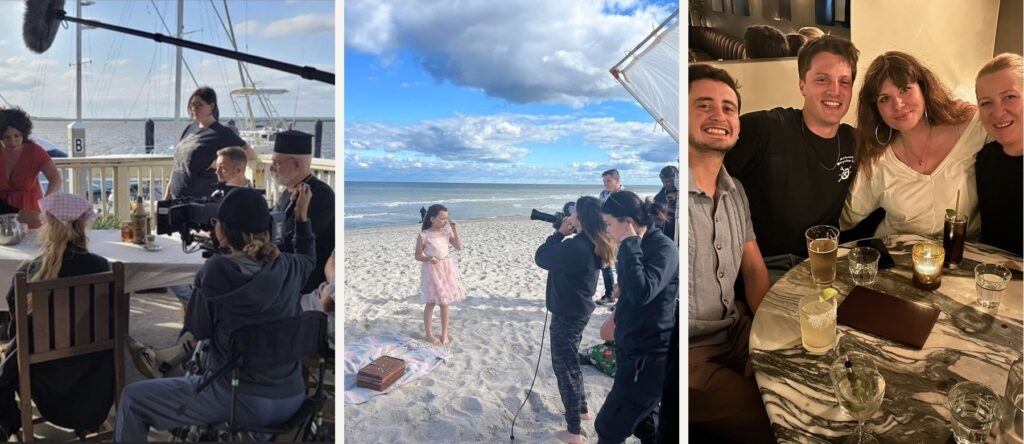
Marina, beach, restaurants and local businesses: the island kept becoming part of the production.
Four hours for the Songs
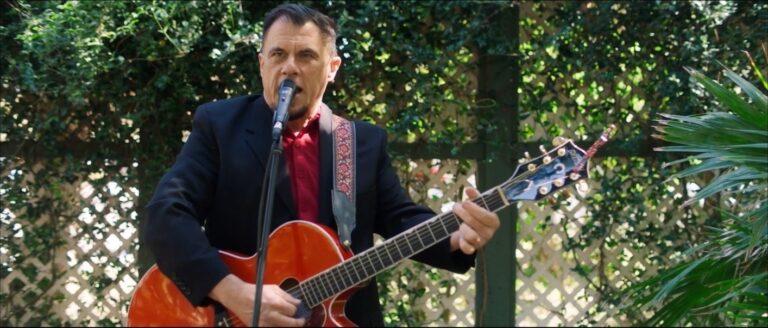
The pace was just as intense with the music. I wrote the lyrics for the original songs. Our composer in Spain had to turn the music around almost immediately, and the songs came together in about 24 hours because everything had to be ready for the shoot.
The actors met one another the day before filming started. Then we had about four hours to record all the songs.
Four hours. It worked.
That was one of the first moments when I felt the chemistry of the group. People had barely met, and already something had clicked.
A group that had only just met began to feel like a film family very quickly.
TV5MONDE Says Yes too
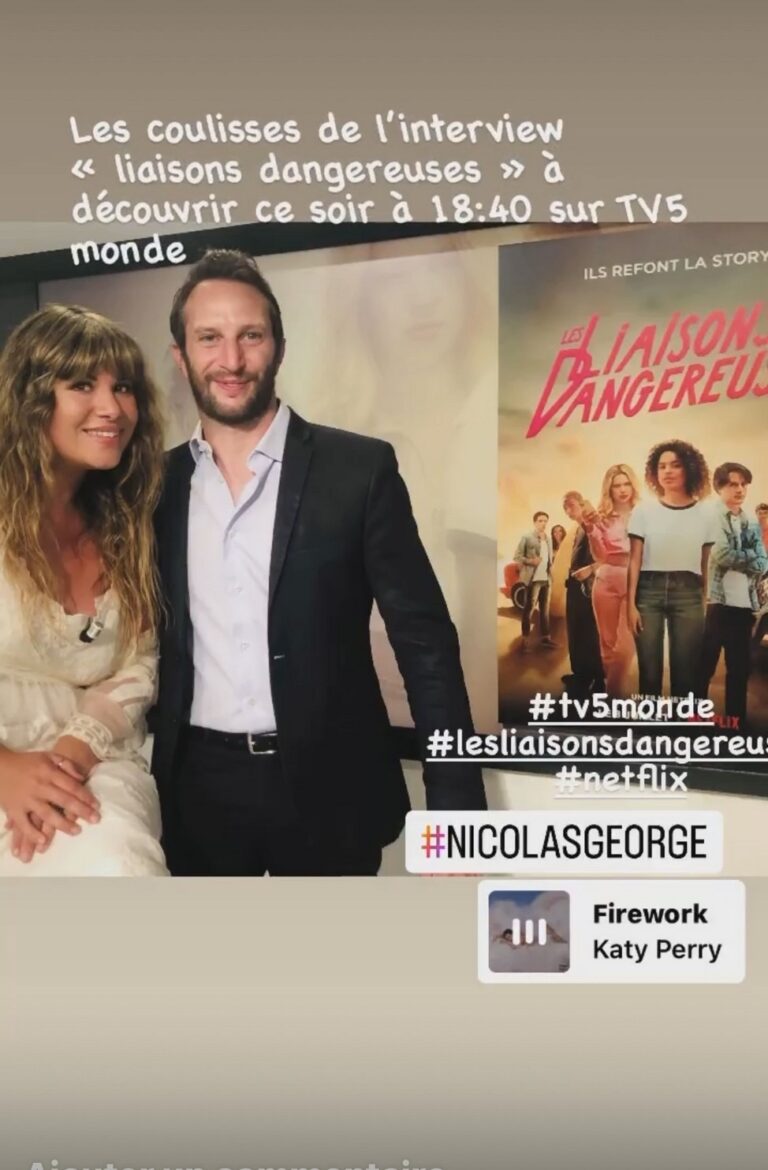
When Dangerous Liaisons came out, Nicolas Jorge interviewed me on the TV5MONDE set. I was terrified. I had almost no experience being interviewed as a director, and I think it may actually have been my first proper television interview of that kind.
Nicolas and the team were incredibly human. They made me comfortable almost immediately and genuinely supported the film. So when Greek Mothers Never Die started taking shape, I asked whether TV5MONDE would be willing to take part.
They did more than agree. I sent Nicolas the scene, and he reworked the text so it sounded journalistically real. Then he played himself, and we shot the scene properly on the TV5MONDE set.
I am especially proud of that scene because it feels real. Because, in many ways, it was.
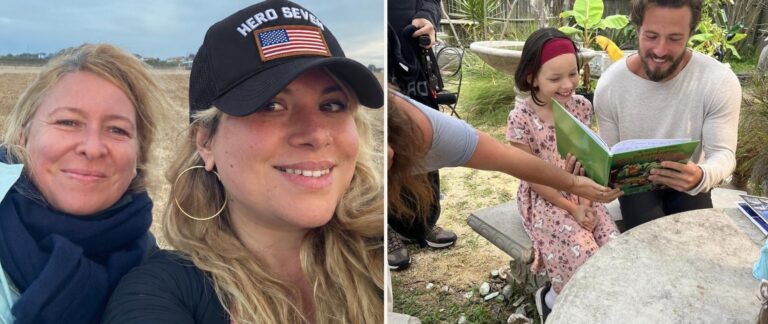
With Nicolas Jorge at TV5MONDE during Dangerous Liaisons - before they generously stepped into Greek Mothers Never Die as themselves.
Seventeen days, Several hats
Then came the shoot.
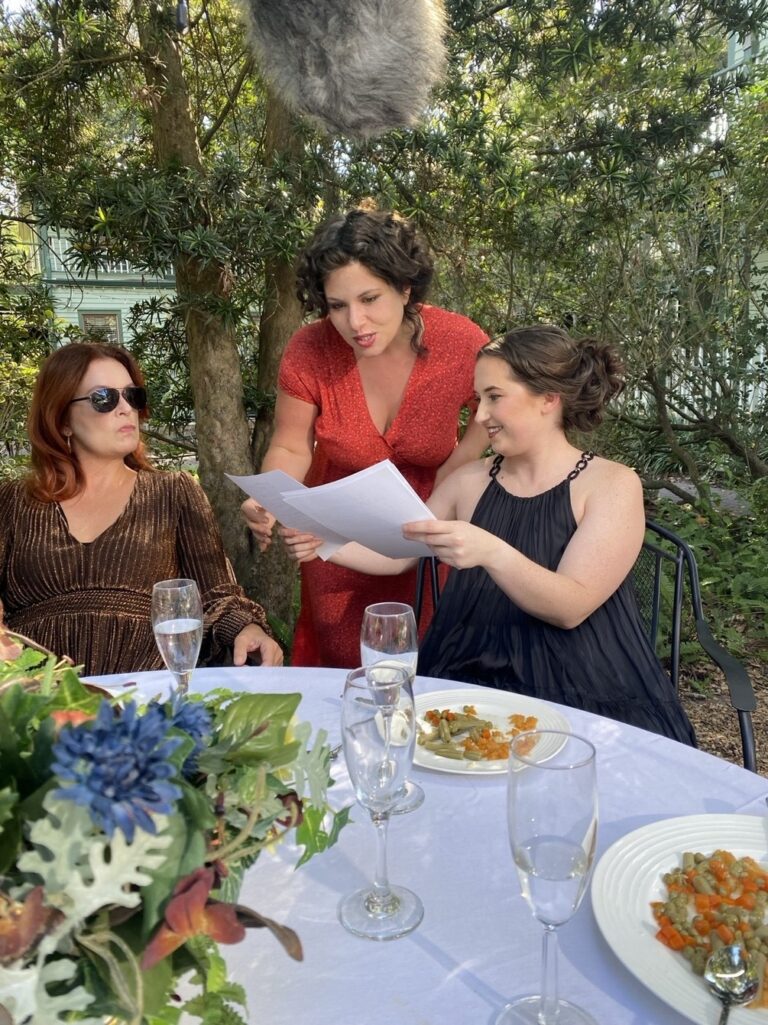
Nothing ever went exactly as planned. A location changed. Something stopped working. A scene needed rewriting. At the same time I might be solving a production issue, answering questions as the director, and then somebody would remind me that I was in the next shot.
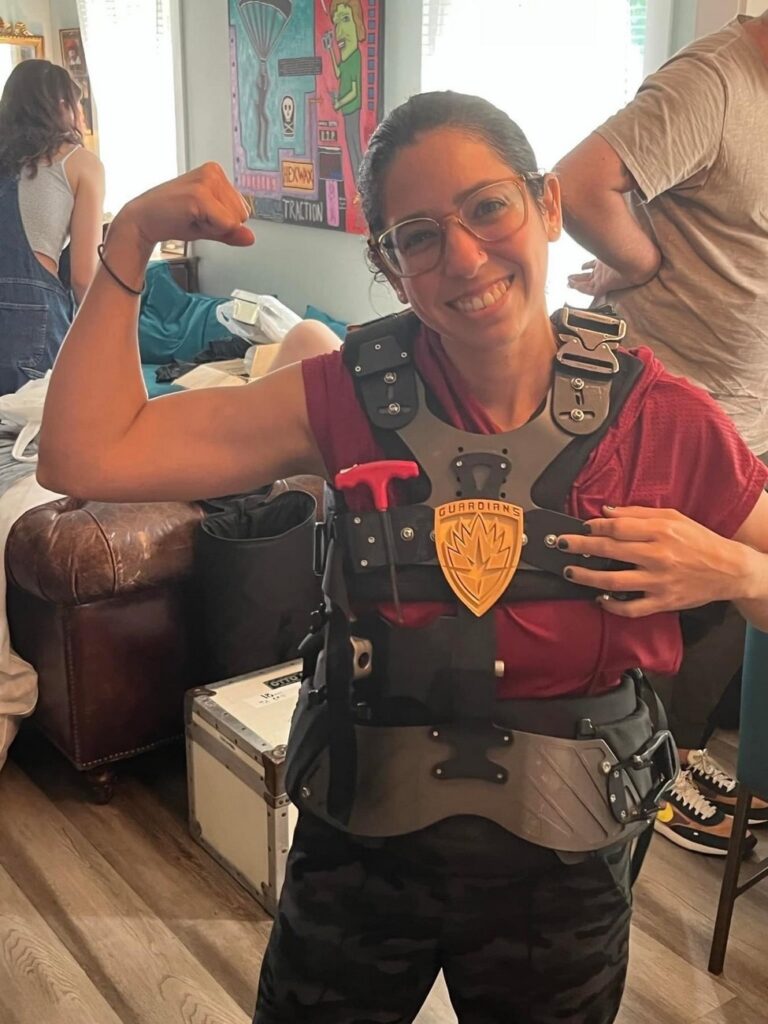
Producer. Director. Actress. Sometimes within the same few minutes. Costume. Hair. Camera. Act. Then back out again. There were constant surprises, but after a while I stopped treating every surprise as a disaster. Again and again, something that looked like a problem became a redirection that took the film somewhere it needed to go.
You adapt. You rewrite. You solve what is in front of you. And you keep shooting.
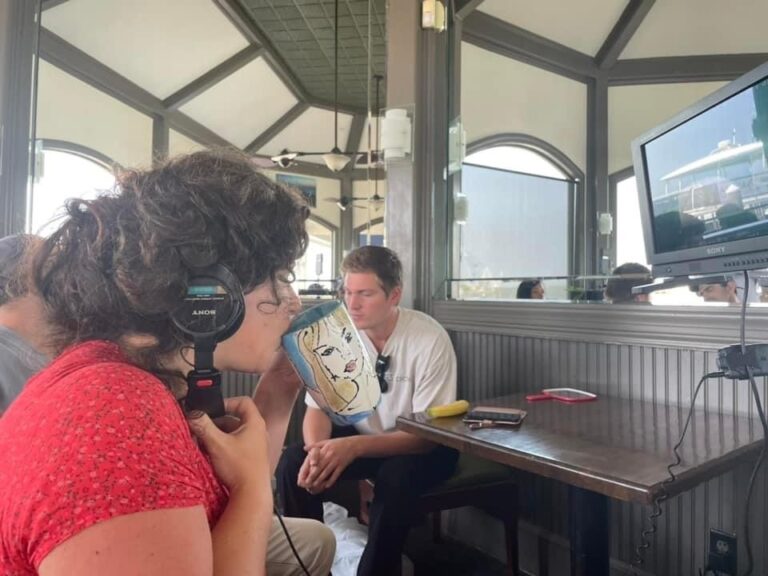
Headphones on, coffee in hand, eyes on the combo - and usually several other problems being solved at the same time.
Atlanta, a Hotel room, and Festival season
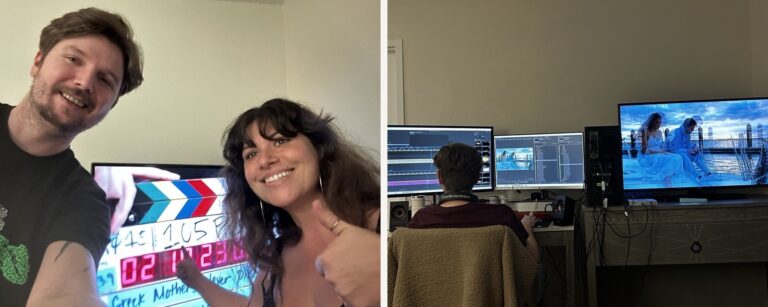
The sprint did not end when we wrapped. Justin West, my editor, was based in Atlanta. He came down and essentially shut himself inside a hotel room for weeks so we could keep moving fast. Boom Post Audio in Atlanta handled the post audio.
I did not want to miss festival season. Because festivals could accept a work in progress, we had a narrow window and decided to use it.
We cut the film in roughly a month or two. It was an enormous amount of work in a very short period of time: picture, rhythm, music, sound, constant decisions, constant revisions.
The set had been a sprint. Post became another one.
Justin West and the edit: long days, hotel-room work, and a deadline we refused to miss.
Everybody pushed the film
The sprint did not end when we wrapped. Justin West, my editor, was based in Atlanta. He came down and essentially shut himself inside a hotel room for weeks so we could keep moving fast. Boom Post Audio in Atlanta handled the post audio.
I did not want to miss festival season. Because festivals could accept a work in progress, we had a narrow window and decided to use it.
We cut the film in roughly a month or two. It was an enormous amount of work in a very short period of time: picture, rhythm, music, sound, constant decisions, constant revisions.
The set had been a sprint. Post became another one.